
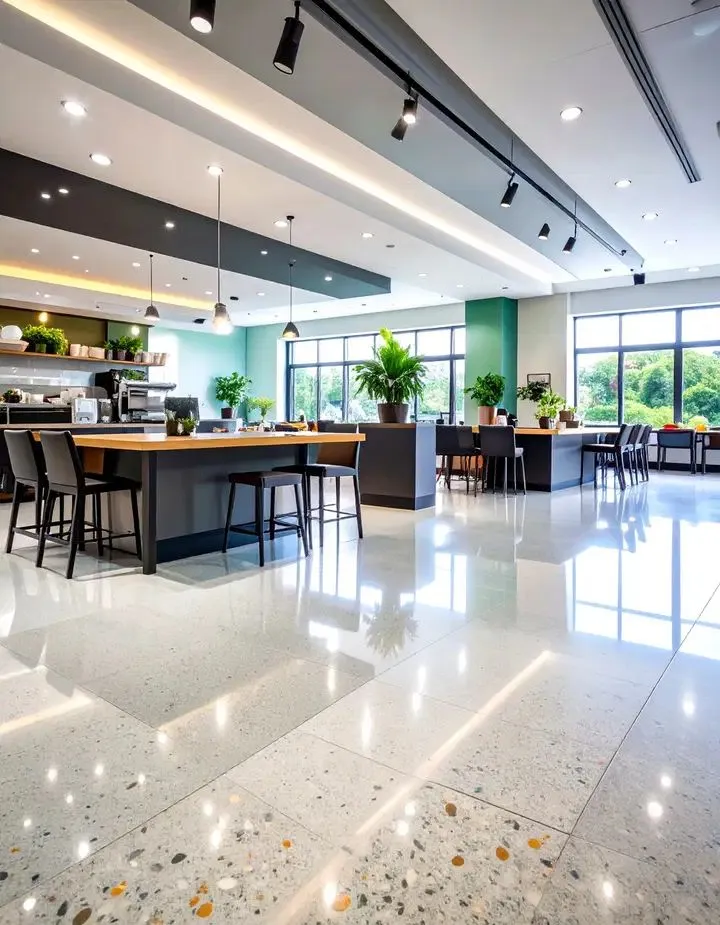
Shared offices bring together people with different working habits. Freelancers may need quiet desks, small teams book meeting rooms, and visiting clients use the reception area throughout the day. These overlapping activities create challenges for property managers selecting suitable finishes. An office floor coating can provide a consistent surface over properly prepared concrete, but appearance is only one consideration. Acoustics, accessibility, furniture movement and cleaning schedules should influence the decision. Planning around how members actually use the workspace can help create a more practical environment.
Study How Each Area Operates
Coworking facilities often combine private offices, open desks, lounges and conference rooms. Each zone experiences different levels of movement, furniture rearrangement and daily cleaning. Understanding those differences helps determine where protective flooring is appropriate.
Observe the busiest hours and identify spaces used for events or temporary meetings. A reception area may experience concentrated foot traffic, while quieter offices require greater attention to visual comfort and acoustic conditions.
Consider Noise Before Choosing Gloss
Hard flooring surfaces can reflect sound, particularly in open rooms with limited soft furnishings. Footsteps, moving chairs and conversations may become more noticeable when the interior has exposed ceilings and large windows.
Flooring alone cannot resolve acoustic problems. Ceiling panels, upholstered furniture and suitable room dividers may help manage noise. Property managers should coordinate these elements rather than expect a decorative coating to improve every aspect of workplace comfort.
Plan Around Flexible Furniture
Coworking layouts often change as membership grows. Tables may be combined for workshops, desks repositioned and rolling storage units moved between rooms. Such activities can concentrate wear in particular areas.
Suitable furniture feet and compatible chair casters can help protect a finished floor. Heavy cabinets should be moved carefully rather than dragged. Keeping some open space also reduces unnecessary rearrangement during busy working periods.
Choose Appropriate Surface Materials
Different epoxy flooring systems offer different characteristics relating to abrasion, appearance and curing. Solid colours, decorative flakes and other finishes may suit selected commercial interiors when the concrete is properly prepared.
Material choice should reflect expected traffic and exposure conditions. Ask about coating thickness, protective layers and cleaning requirements. A system suitable for a dry meeting room may need reassessment before being used near a frequently wet entrance.
Prepare the Building for Installation
Existing office floors may contain carpet adhesives, previous coatings or damaged concrete hidden beneath furnishings. These conditions can affect the preparation required before applying a resin system.
Mechanical grinding and suitable repairs may be necessary. Contractors should also assess moisture where relevant and explain installation restrictions. Completing this work before installing expensive furniture can reduce unnecessary disruption and protect the finished surface.
Consider Member Access and Safety
A shared workspace must remain comfortable for people with different mobility needs. Floor transitions, suitable traction and clear walking routes are important, particularly around entrances, kitchens and washrooms.
Before approving the project, consider:
-
Accessible routes between work zones.
-
Surface traction near wet entrances.
-
Temporary access during renovation.
-
Protection for rolling furniture and equipment.
-
Cleaning products suitable for the finish.
These details help managers evaluate both installation requirements and everyday usability.
Coordinate Work With Member Schedules
Closing a coworking area can affect several independent businesses simultaneously. Members may have deadlines, meetings or equipment that cannot easily be relocated without notice.
Provide a clear installation schedule and identify alternative rooms where practical. Discuss dust control, ventilation and curing restrictions with the contractor. Reopening should follow product-specific guidance rather than assumptions based on how dry the surface appears.
Maintain a Consistent Cleaning Routine
Shared workplaces require reliable cleaning because many people use the same entrances, desks and communal facilities. A relatively continuous coating may simplify some floor-cleaning tasks but still requires appropriate maintenance.
Remove grit regularly, clean spills promptly and use compatible cleaning solutions. Staff should document recurring damage or moisture problems. Written instructions can help maintain consistency when cleaning contractors or workspace managers change.
Conclusion
Flooring in a coworking environment should support flexibility, accessibility and manageable cleaning without creating unnecessary discomfort. Property managers need to consider sound, furniture movement, surface preparation and member access before selecting decorative finishes. The most useful flooring choice complements the building’s operating requirements rather than simply improving its appearance. For businesses exploring commercial concrete coatings across Toronto and surrounding Ontario communities, quickfxepoxy.ca provides information about office flooring services. Thoughtful planning can help shared workspaces remain welcoming and adaptable as membership needs change.